

Every load placed, tracked and closed by one owner.
FTL · PTL · ODC · Projects
- Tons of cargo moved every year
- 1 Lakh+
- Vehicles placed for customers since 2020
- 50,000+
- Businesses served since 2020
- 500+
- Cities, with 30+ satellite offices
- 20+
Ways we move your cargo
Full truck, part truck, over-dimensional or a project of its own.
- FTL
Full truckload (FTL)
A whole vehicle placed for your consignment alone, running direct from the loading point to the unloading point.
Best for: High-volume, high-capacity loads and time-bound dispatches.
- Vehicle matched to the load: LCV, open-body, closed or heavy-load Taurus
- No transhipment between loading and unloading
- Tracked 24×7 from dispatch to digital POD
- PTL
Part truckload (PTL)
For loads that do not need a full vehicle. Your consignment shares a truck with others, and you pay for the space it takes.
Best for: Smaller consignments and regular replenishment that do not fill a truck.
- Pay for the capacity you use, not the whole vehicle
- Each consignment booked on its own LR number, which you can quote to track it
- The same carrier, vehicle and driver qualification as an FTL move
- ODC
Over-dimensional cargo (ODC)
Over-dimensional and heavy cargo: wind turbine blades, aircraft bodies, earth-movers and plant machinery.
Best for: Cargo that is longer, wider, taller or heavier than a standard vehicle carries.
- Wind turbine blades, heavy hauls and industrial machinery
- Extended and low-bed trailers for long and heavy loads
- Routed by planners who read the road and traffic before dispatch
- Projects
Plant relocation & projects
Full plant relocations and project moves that need a plan of their own, built around the cargo, the site and the schedule.
Best for: Plant moves and one-off project cargo that do not fit a regular lane.
- Dismantling, loading, transport and reassembly for plant relocations
- A movement plan agreed before a vehicle is placed
- One accountable team, with progress reported against the plan
Included with every mode
- Carrier governance
- Vehicle qualification
- Driver qualification
- 24×7 digital tracking
- Exception management
- Digital POD
- Performance management
- Dedicated account management
FTL or PTL
Which one fits your load?
Full truckload
- Your load
- Fills a vehicle, or needs one to itself
- The vehicle
- Dedicated to your consignment
- What you pay for
- The whole vehicle
- The route
- Direct, from loading point to unloading point
Part truckload
- Your load
- Smaller than a full vehicle
- The vehicle
- Shared with other consignments
- What you pay for
- The space your consignment takes
- The route
- Consolidated with other loads on the lane
Not sure which fits? Share the load, the lane and your dates, and our team will recommend the mode and the vehicle.
Ask which mode fitsPlan your shipment
The right vehicle, the right papers and a clear rate.
Four things decide the vehicle: the weight and volume of the cargo, what the cargo is, the route and the access at both ends, and cost.
Vehicles we place
| Vehicle | Body | Best for |
|---|---|---|
| LCV open | Light commercial, open body | Smaller and urgent loads on short-haul and city routes |
| Open-body truck | Open deck with side walls | Machinery, steel, bagged and bulk cargo loaded from the top or the side |
| Closed container truck | Fully enclosed box | Cartons, FMCG and white goods that need protection from weather and pilferage |
| Multi-axle (Taurus) | Heavy-duty open body | High-tonnage loads such as steel, cement and bagged cargo |
| Extended and low-bed trailers | Long or lowered flat deck | Over-dimensional cargo: wind turbine blades, plant machinery, earth-movers |
Payload and dimensions vary by make and model. Our team confirms the exact vehicle when it plans your load.
Send these with the indent so the vehicle is not held at loading or on the road.
Every consignment
- Tax invoice, or a delivery challan for non-sale movement
- E-way bill, where GST rules require one
- Lorry receipt (LR), issued by Wheelson
- Packing list for multi-package loads
At delivery
- Consignee signature and stamp on the POD
- Digital POD uploaded to moWe
- Any shortage or damage noted on the POD
ODC and project cargo
- Cargo drawing with dimensions, weight and lifting points
- Route survey for the planned route
- Permits from the road authorities on the route
- Escort vehicles where a permit requires them
A freight rate reflects the lane, the vehicle and anything that holds the vehicle up.
Lane and distance
Origin, destination and the route between them, including tolls.
Vehicle size and body
The capacity and body type the cargo needs.
FTL or PTL
A whole vehicle, or only the space your consignment takes.
Return loads
Lanes where trucks find a return load usually cost less.
Loading and unloading time
Waiting at either end can add detention charges.
Permits and escorts
ODC moves add route surveys, permits and escort costs.
How a shipment runs
From indent to settlement, on one system.
- 1
Indent and plan
Your order is raised as an indent on the TMS, and the lane, vehicle type and rate are planned.
- 2
Qualify and place
A qualified carrier, vehicle and driver are assigned before vehicle placement.
- 3
Dispatch and track
The vehicle is tracked 24×7 on moWe, across GPS, SIM and FASTag, with a running ETA.
- 4
Manage exceptions
Delays and deviations are flagged and acted on by the operations team.
- 5
Deliver and close
Digital POD is filed, then freight settlement and a performance review close the trip.
Checked before every vehicle is placed
- Registration (RC)
- Fitness certificate
- Insurance
- Permits
- Driving licence
- Carrier GST and PAN
Every consignment planned and tracked on moWe, and owned by one accountable team.
Technology on every trip
Four agents and moWe work on every load.
Qualification Agent
Carrier, vehicle and driver cleared first
Planning Agent
Trip planned from the indent
Traceability Agent
Traced 24×7, with a running ETA
Intelligence Agent
Risks flagged with a next action
On the road
Over-dimensional and project cargo we have moved.
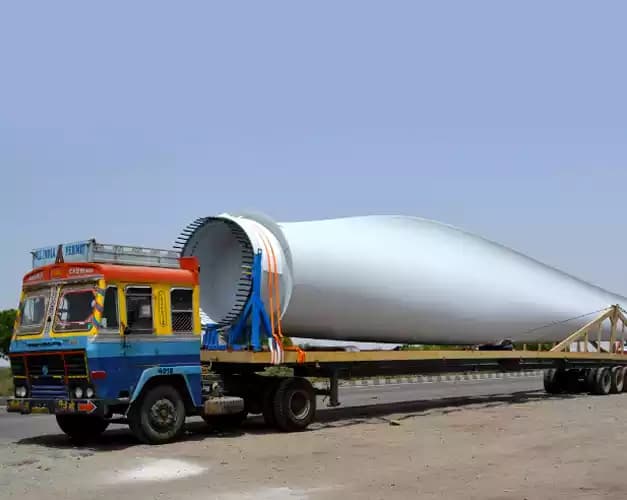
Wind turbine blades 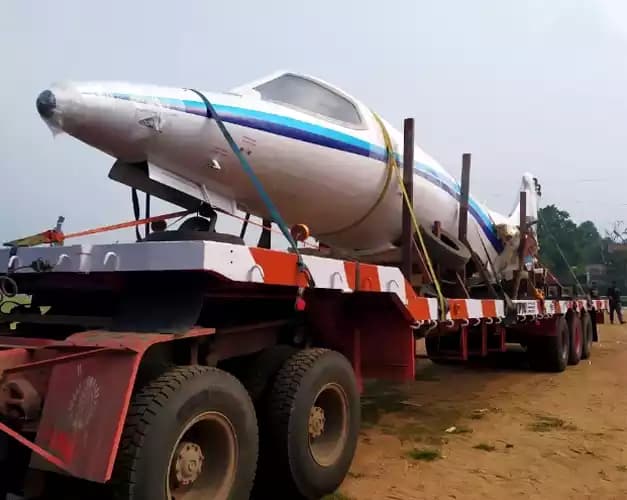
Special cargo 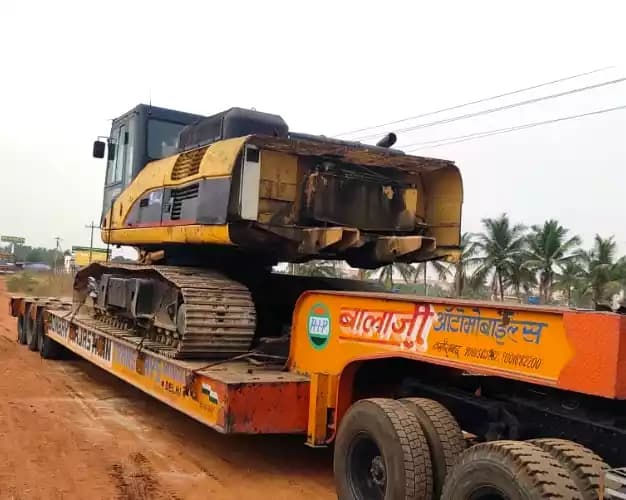
Heavy hauls 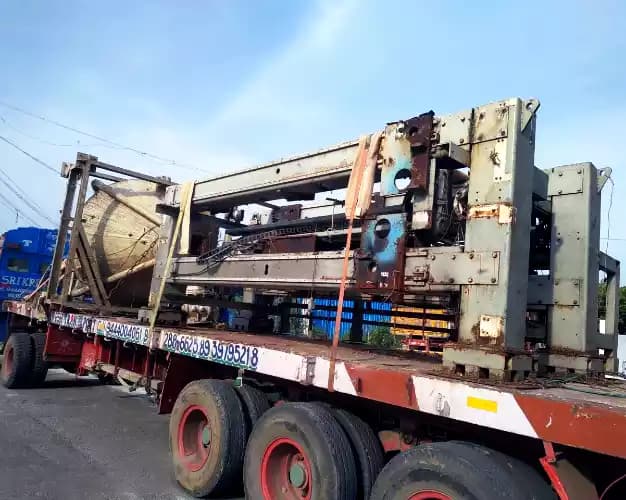
Industrial machinery
How an ODC move is planned
- 1
Cargo assessment
Dimensions, weight, centre of gravity and lifting points, taken from the drawing.
- 2
Route survey
Road width and turning radius, bridge load limits, gradients and overhead cables along the route.
- 3
Permits
Approvals from the road authorities on the route, such as the PWD, RTO and police.
- 4
Trailer and equipment
An extended or low-bed trailer chosen for the load, with lifting equipment arranged where needed.
- 5
Loading and lashing
Cargo secured to the trailer for its weight and shape before it leaves.
- 6
Escorted movement
Moved on the permitted route and timings, with escort vehicles where required.
Industries we serve
- FMCG & food
- Metals, iron & steel
- Auto & engineering
- Agri & construction equipment
- Building materials
- Energy & special projects
Runs on the Wheelson backbone
Technology, governance and operations — as one system.
Governance
Carriers, vehicles and drivers qualified by agents before they are assigned to your cargo.
Business agentsTechnology
Indent to settlement on moWe, with 24×7 tracking across GPS, SIM and FASTag.
moWe Agentic TMSOperations
Wheelson teams run dispatch, exceptions and POD closure, and report against agreed KPIs.
All solutions
Questions shippers ask
Transportation, answered.
What is the difference between FTL and PTL?
With full truckload (FTL), a whole vehicle is placed for your consignment and runs direct from loading to unloading. With part truckload (PTL), your consignment shares a vehicle with others and you pay for the space it takes. FTL suits loads that fill a vehicle or need one to themselves. PTL suits smaller loads.
Which vehicle types do you place?
LCV open, open-body trucks, closed trucks and heavy-load Taurus vehicles for full-truck moves, with extended and low-bed trailers for over-dimensional cargo.
Do you move over-dimensional cargo?
Yes. Our ODC work covers wind turbine blades, heavy hauls, industrial machinery and special cargo such as aircraft bodies and earth-movers.
Where do you operate?
Across India, and into Nepal and Bangladesh, with GPS-tracked vehicles. Wheelson has a presence in 20+ cities, with regional offices in Coimbatore, Chennai, Bengaluru, Mumbai, Delhi and Kolkata, and 30+ satellite offices.
Can you attach dedicated vehicles to our operation?
Yes. Vehicles can be attached to your operation on contract, with standard, hybrid, EV and CNG options, and run by Wheelson teams on moWe like every other trip.
How are vehicles and drivers checked?
Carriers, vehicles and drivers are qualified before they are assigned to your cargo. The checks run through the Qualification Agent on moWe.
How do I track my consignment?
Every consignment is tracked 24×7 on moWe, across GPS, SIM-based tracking and FASTag toll data. Enter your LR number on the Track page and our operations team will share the current location, the last checkpoint and the expected arrival.
What documents do I need to send a consignment?
A tax invoice (or a delivery challan for non-sale movement), an e-way bill where GST rules require one, and a packing list for multi-package loads. Wheelson issues the lorry receipt (LR), and the consignee signs the POD at delivery. Over-dimensional cargo also needs the cargo drawing and the route permits.
What affects the freight rate for my load?
The lane and distance, the size and body of the vehicle, whether it moves as FTL or PTL, how easily trucks find a return load on that lane, time spent waiting at loading or unloading, and, for ODC, the route survey, permits and escorts.
How is an over-dimensional move planned?
We start from the cargo drawing, survey the route for road width, bridge limits and overhead clearances, take permits from the road authorities, choose an extended or low-bed trailer, secure the load, and move it on the permitted route with escorts where required.
How do I get a rate for my load?
Tell us the lane, the cargo, the load size and your dates through the enquiry form. Our team will recommend the mode and the vehicle, and share a rate.
Start with the problem
Have a supply chain problem? Start there.
Tell us the problem, not the rate card. We'll come back with the right mix of operations, technology and governance within one working day.